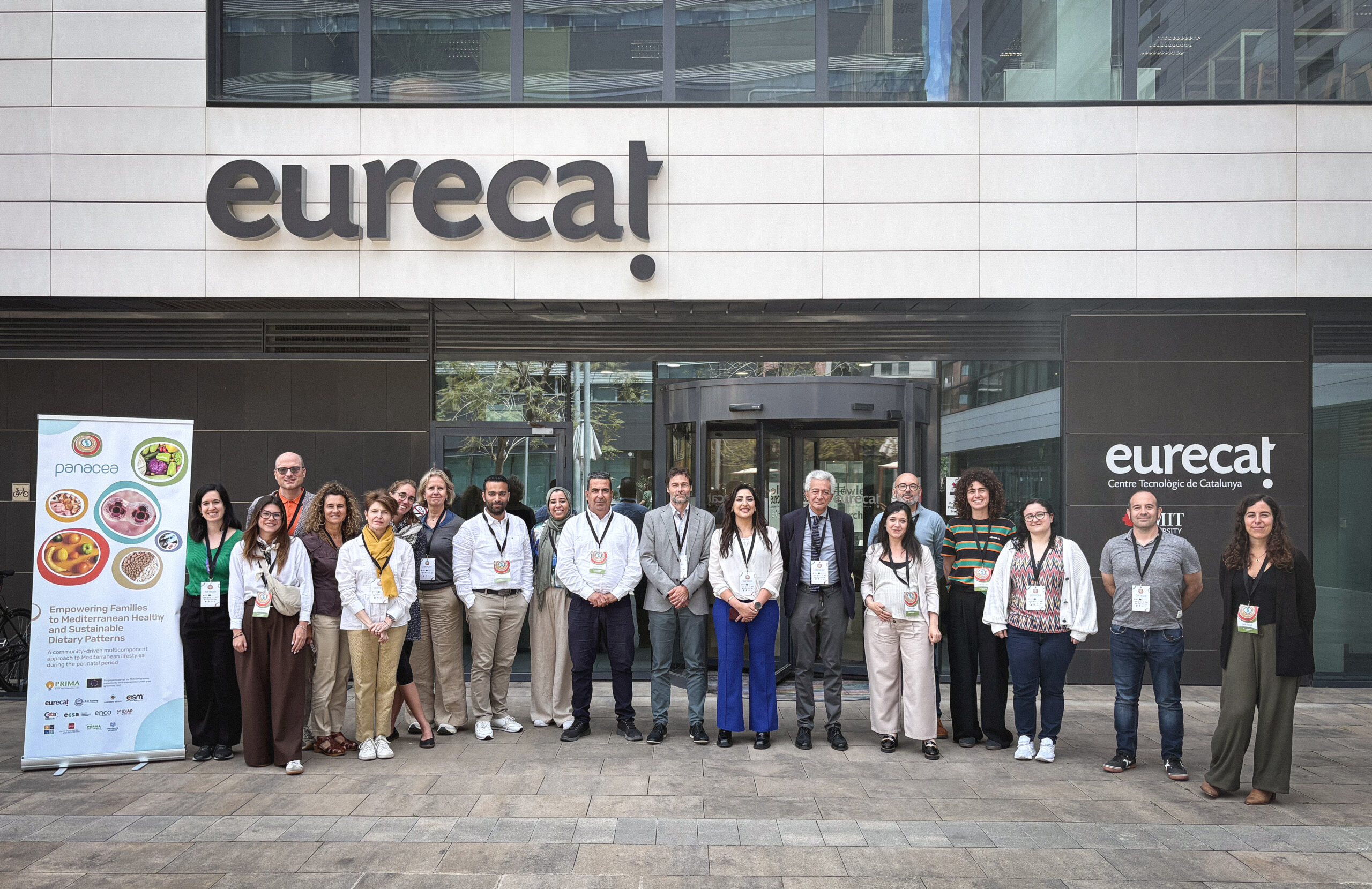

The PANACEA project, a PRIMA-funded initiative that promotes healthy, local and sustainable Mediterranean food habits during the perinatal period, from pregnancy to the first months after birth, kicked off in Barcelona the past 7 and 8 of May, 2026 in the facilities of Eurecat in Barcelona.
Through a community-based and multicomponent approach, PANACEA will support families with digital guidance, nutrition and cooking workshops, practical educational resources and peer-support activities.
The project will be implemented in Spain, Italy and Egypt, involving 420 families and working to strengthen Mediterranean diet adherence, sustainable food choices and consumer empowerment.
In this regard, PANACEA will bring together science, digital technology and citizen participation, through the application of digital tools, artificial intelligence-based recommendation models, nutritional and environmental assessment systems, and innovative strategies for connecting families, communities and short supply chains for local produce.
The PANACEA project, which is co-funded through the PRIMA programme and coordinated by the technology centre Eurecat, has an interdisciplinary consortium of twelve partners, bringing together actors from research, innovation, education, business, public bodies and non-governmental organisations.
The consortium is made up of the IDIAP Jordi Goal, Reus City Council and Eurecat, from Spain; the University of Parma, Parma Sostenibilie, ENCO Consulting and the Magnaghi Solari Salsomaggiore Terme State Secondary Education Institute, from Italy; the Confederation of Egyptian European Business Associations (CEEBA) and the Arab Academy for Science, Technology and Maritime Transport, from Egypt; Johannes Gutenberg University Mainz and the European Citizen Science Association (ECSA), from Germany; and All Soft Multimedia, from Tunisia.