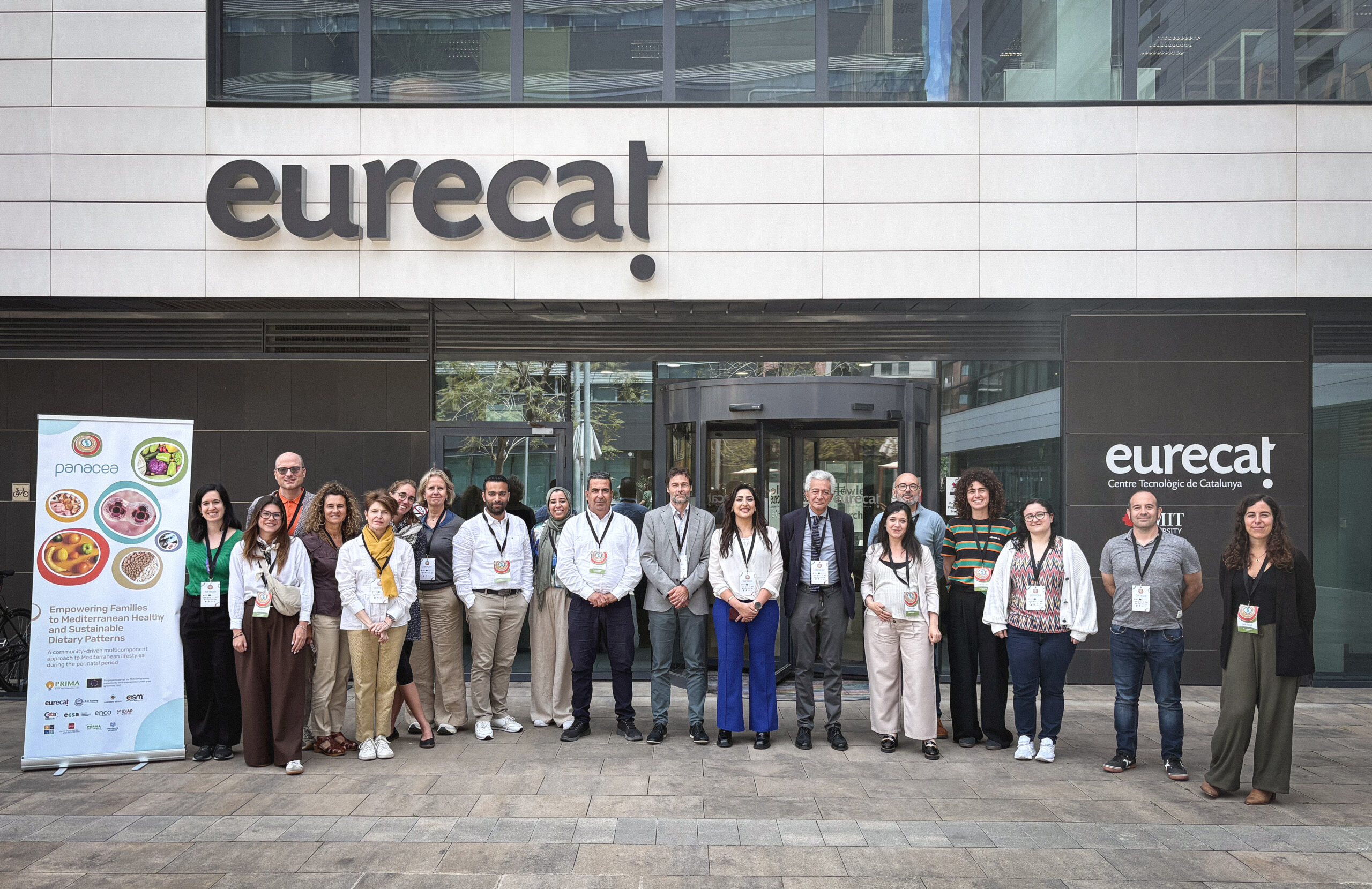


The international PANACEA project, coordinated by the technology centre Eurecat, promotes the adoption of Mediterranean, healthy and sustainable eating habits in pregnant women from the second trimester until the baby’s first four months. The project integrates nutritional and culinary education, digital coaching tools, motivation strategies and initiatives to promote local consumption, with the aim of extending the benefits to the whole family.
To achieve this, PANACEA will implement a community intervention in two phases, combining components such as perinatal health, the Mediterranean diet, food sustainability and digital technologies.
In the first phase, the interventions will be co-designed with representatives from various sectors, including healthcare professionals, local farmers and producers, chefs and culinary experts, and community agents, to tailor the actions to the real needs of families and the context of each territory.
In a second phase, the tools developed will be tested in an intervention lasting almost eleven months in Spain, Italy and Egypt, with 420 women. This intervention will combine educational nutrition and cooking workshops, practical materials and behavioural support, through a digital app, motivational strategies and “farm-to-table” initiatives, to assess the impact of this integrated approach from a dietary perspective, as well as in behaviour and in the psychosocial, health and environmental spheres.
We want to promote healthier and more sustainable food environments in families' daily habits
Lorena Calderón, Researcher at Eurecat's Nutrition and Health Technology Unit and project coordinator
The intervention will involve pregnant women and their family units, including partners, children and other relatives involved in childcare, with the aim of promoting changes in habits across the immediate family environment. By acting during pregnancy and early parenting, PANACEA seeks to lay the foundations for family routines that can be maintained over time.

The study will run from the second trimester of pregnancy until four months after delivery, so that improvements in adherence to the Mediterranean diet and in the adoption of sustainable habits, such as, for example, the choice of Mediterranean, organic and locally sourced foods
Antoni Caimari, Director of the Biotechnology Area at Eurecat.
In this regard, PANACEA will bring together science, digital technology and citizen participation, through the application of digital tools, artificial intelligence-based recommendation models, nutritional and environmental assessment systems, and innovative strategies for connecting families, communities and short supply chains for local produce.
The PANACEA project, which is co-funded through the PRIMA programme and coordinated by the technology centre Eurecat, has an interdisciplinary consortium of twelve partners, bringing together actors from research, innovation, education, business, public bodies and non-governmental organisations.
The consortium is made up of the IDIAP Jordi Goal, Reus City Council and Eurecat, from Spain; the University of Parma, Parma Sostenibilie, ENCO Consulting and the Magnaghi Solari Salsomaggiore Terme State Secondary Education Institute, from Italy; the Confederation of Egyptian European Business Associations (CEEBA) and the Arab Academy for Science, Technology and Maritime Transport, from Egypt; Johannes Gutenberg University Mainz and the European Citizen Science Association (ECSA), from Germany; and All Soft Multimedia, from Tunisia.